


 Two content strategists examine Content Inc. through different professional lenses and assess how Pulizzi’s audience‑first model performs in an AI‑driven content landscape.


The book is relevant to creators, entrepreneurs, and content strategists navigating competitive digital environments. Its audience‑first model addresses a central challenge in today’s content economy: building trust and visibility before monetization. As digital platforms evolve quickly, Pulizzi’s focus on niche clarity, sustained audience relationships, and multi‑channel expansion provides a durable strategic foundation.
This report examines Joe Pulizzi's Content Inc. (2021) and reflects on its relevance in today’s content landscape from two complementary perspectives:
- Angela is a content manager with a background in web copywriting, exploring how clarity, nuance, and audience focus shape meaningful digital content.
- Felipe is a film editor with a passion for cross‑channel storytelling, exploring how narratives build emotional resonance and cohesion.
Both study Content Strategy to deepen their understanding of how content creates value for audiences, organizations, and creators.
Why we chose this book #
Although Content Inc. is written for creators and entrepreneurs rather than academic audiences, it fills a relevant gap in our studies. In the Content Strategy programme, we engage with foundational texts such as
- Halvorson & Rachl’s Content Strategy for the Web and
- Paula Ladenburg Land’s Content Audits and Inventories,
which emphasize governance, workflow, structure, and organizational alignment. - Margot Bloomstein’s Trustworthy
extends this perspective by exploring how voice, tone, and narrative consistency build credibility – a key dimension of audience relationships.
Pulizzi’s book complements these academic foundations by shifting the focus toward
- long‑term audience building,
- content differentiation,
- and creator‑driven business models.
As students interested in storytelling from different angles, we were drawn to how Content Inc. connects narrative identity with strategic audience development, offering a practical counterpoint to the more organizationally focused literature in our coursework.
1. Introduction: Core Premise and First Impressions #
Joe Pulizzi opens Content Inc. with telling his personal story which quickly leads to the book’s central hypothesis:
Build the audience first, then define products and services.
Pulizzi frames this as a bold, motivating proposition – going as far as saying that making $5M in five years is “within reach for anyone.”
He deliberately keeps this claim industry-agnostic, addressing “creators” in very broad terms rather than situating the promise within a specific sector or business model, which makes the proposition widely appealing but leaves readers without a clear sense of who the $5M scenario realistically applies to.
In context, this reflects the optimism of the early creator-economy era. As Angela notes, the promise carries a distinctly American tone and raises questions about its applicability across different markets, corporate environments, or for creators without a financial safety net.
1.1 Who the book is for
The primary audience comprises
- independent creators,
- niche educators,
- and small businesses pursuing an audience‑first strategy.
Readers within larger organizations may still draw strategic inspiration, though the model requires adaptation to fixed structures, governance frameworks, and predefined communication processes.
1.2 Initial Perspectives
As Angela highlights, the introduction is less on content tactics and more on mindset: clarity, goal setting, and long‑term thinking. Pulizzi emphasizes defining personal goals and tracking them consistently – a trait he associates with successful entrepreneurs.
Felipe observes that the opening chapters encourage a shift away from short‑term monetization toward creating sustainable value. This is especially relevant in today’s fast‑changing environment, where human connection continues to differentiate meaningful content despite advancing technological automation. The emphasis echoes Bharat Anand’s The Content Trap, which argues that connections – not content or platforms – drive long‑term success.
2. Summary of the Core Model (Content Inc. Framework) #
At its core, Content Inc. proposes a reverse business model: creators should build an audience around a focused content niche and monetize only after trust and relevance have been established.
2.1 The Seven Core Steps (Figure 1.1)
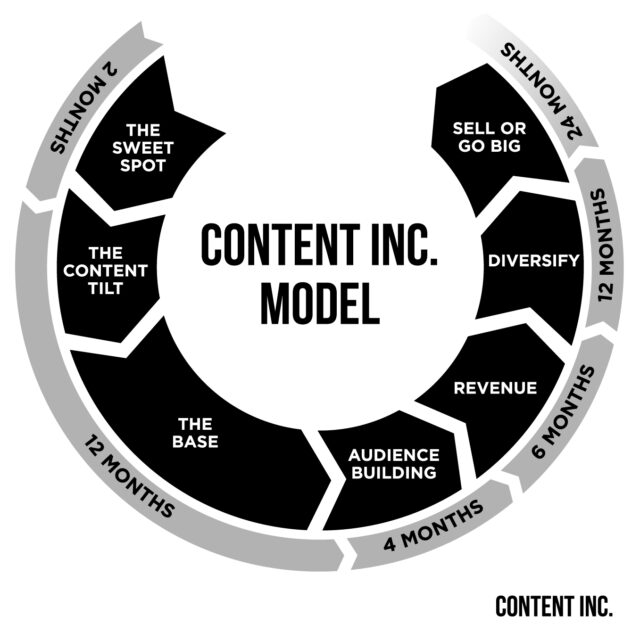
Figure 1 – Model overview by Joe Pulizzi
Pulizzi visualizes the model as a clear sequence from niche discovery to long-term scalability:
- The Sweet Spot – intersection of expertise and an underserved audience need
- The Content Tilt – a distinctive, differentiating perspective
- The Base – one primary platform, consistently executed
- Audience Building – converting reach into an owned audience
- Revenue – monetization only after connection and trust
- Diversify – expanding formats and channels
- Sell or Go Big – exiting or scaling further
2.2 How the Book Structures These Ideas (Nine Parts)
While often summarized in seven steps, the second edition is organized into nine parts that deepen each stage:
- Starting the Journey – mindset and preparation
- The Sweet Spot – defining the niche
- The Content Tilt – differentiation
- The Base – building the primary platform
- Audience Building – boosting findability and subscriptions
- Revenue – monetization strategies
- Diversify – format and channel extensions
- Sell or Go Big – scale or exit
- Next‑Level Content Incorporated – advanced approaches
In practice: the seven steps provide the strategic sequence; the nine parts offer detailed guidelines for implementation.
2.3 Why the Model Matters in Practice
Angela emphasizes that Pulizzi’s framework reinforces the importance of focus, clarity, and consistency – principles essential for content managers navigating noisy environments. Building a strong base before diversifying aligns with editorial discipline and the need for recognizable voice, tone, and structure.
Felipe adds that the model mirrors storytelling craft: define context (sweet spot), choose an angle (tilt), establish the main storyline (base), then branch into sequels and parallel arcs (diversify). Its iterative and exploratory spirit strongly aligns with design thinking.
Both authors agree that the model’s strength lies in its balance of strategic direction and creative exploration. It encourages creators to go deep before they go broad.
3. The Strategic Value of Niche Precision #
The book sets a clear emphasis on focus and niche definition. In today’s content-saturated environment, Pulizzi argues that being more specific – not broader – is the key to standing out. A tilt transforms a general topic into a compelling, ownable focus.
3.1 Examples: From Generic to Specific
- Instead of “SEO basics,” consider:
- SEO for freelance illustrators pitching overseas clients
- Local SEO for independent dental practices in mid‑size cities
- Search strategy for bilingual service providers (EN/ES)
- Instead of “Productivity tips,” consider:
- Time‑boxing for solo creative studios with client sprints
- Deep‑work systems for UX writers in enterprise environments
3.2 Why This Matters
Angela notes that Pulizzi’s approach sharpens awareness for user‑specific perspectives and makes the need for concrete scenarios even more explicit. In practice, this means approaching briefs with greater intentionality – asking not only “Who is this for?” but “Which exact situation does this piece serve, and what angle sets it apart?”
Felipe adds that niche clarity functions much like storytelling: a narrative becomes compelling not through breadth, but through focus. Defining a tilt is similar to choosing the emotional and thematic lens of a film. It shapes cohesion, tone, and ultimately the connection with the audience.
Both agree that specificity builds trust; depth builds authority. In crowded environments, these are not optional – they are foundational.
4. Deepening Content with Human Hooks (Practical Principles) #
Pulizzi’s book is deliberately dense. Its strength lies in combining clear tactics, real‑world case studies, and a rhythm of storytelling that makes abstract concepts tangible. While the book does not address artificial intelligence, one of its central takeaways remains highly relevant today: even in an era of high‑speed AI‑generated content, human storytelling continues to be a core differentiator.
4.1 The “Quilt Test”: Find the Human Hook
Pulizzi frequently uses human‑centered examples, such as the quilting family, to demonstrate how specificity makes content relatable.
- Step: Ask: “Who is the person behind this problem, and what does their lived experience look like?”
- Why it matters: If you cannot identify the human story, the content risks becoming noise. Human hooks translate complexity into relevance.
4.2 Audit the “Patience Ratio”
Pulizzi’s model emphasizes patience and consistency – two qualities that can feel counterintuitive in today’s rapid content cycles.
- Step: Assess whether your recent content pushes too quickly toward conversion. Commit to a trust‑first period: 30 days of content that helps, explains, or inspires – without selling.
- Why it matters: This reinforces the long‑term logic of the Content Inc. model: you are building a business, not a checkout page.
- Example: A company pauses promotional messaging for one month and shifts to content explaining user workflows, sharing behind‑the‑scenes product decisions, and offering templates. Engagement rises – without pushing sales – because trust and clarity increase.
4.3 Writing as Conscious Practice
Both authors resonate with Pulizzi’s call for a conscious writing routine. His approach underscores essential elements of effective content creation:
- simplifying complex ideas
- using bold, clear statements
- summarizing value in short, accessible sections
- resisting automation when depth and narrative matter
These principles support a disciplined but creative writing process – one aligned with both editorial clarity and storytelling craft.
5. Critical Limitations and Open Questions #
Does the Content Inc. model still work today?
While Pulizzi’s model is compelling, several aspects invite critical reflection. One critical question remains: Does the Content Inc. model still work today?
Missing perspective on AI and the attention economy
The second edition does not address artificial intelligence, despite AI now reshaping content production, discoverability, and the dynamics of the attention economy, which can be described as a marketplace where human attention is the most scarce and valuable resource, and where organizations and creators must compete against infinite distractions to build loyal audiences. In an environment where algorithms shift rapidly, and content is increasingly automated, the long-term sustainability of audience-first growth feels more fragile than the book suggests.
Financial reality vs. long‑term vision
There is also an inherent tension between Pulizzi’s long-term vision and the financial reality many creators face. Building content first and monetizing later requires not only patience, but also a degree of financial stability – a buffer that not everyone has. A scenario that could work out is having a sturdy income and creating a content-based business in your spare time. This requires a lot of enthusiasm for a topic, which might also be the secret to success in the end.
Platform‑specific advice ages quickly
Some of the book’s later chapters also lean on platform‑specific tactics which quickly become outdated. With social media environments, SEO rules, and discovery mechanisms evolving at high velocity, certain recommendations feel more vulnerable to obsolescence than the strategic principles underneath. In retrospect, a stronger emphasis on durable fundamentals over channel‑specific advice might have given the book even greater longevity.
Does the model still work in 2026?
In summary, the Content Inc. model still works in 2026, but only in an updated form. AI has made it easy to produce large amounts of generic content, which means that content quantity is no longer a competitive advantage. What remains valuable – and much harder to automate – is
- a clear standpoint,
- a defined niche,
- and a consistent human presence across owned channels.
These elements strengthen the audience‑first logic at the heart of Pulizzi’s framework. However, they also reveal that the original model requires adaptation: creators and organizations must focus less on publishing more content and more on building direct, trust‑based relationships that cannot be replicated by automated systems. Under these conditions, Content Inc. remains a useful strategic foundation, but its effectiveness depends on applying it with sharper focus, stronger differentiation, and a deeper commitment to human relevance in an AI‑accelerated environment. In this sense, the framework survives not as a manual for content volume, but as a blueprint for creating trust that cannot be automated.
6. Final Reflection #
Content Inc. leaves a stronger impression than one might expect from a book built around a single strategic principle. Its core idea – build trust first, then sell – remains relevant in a landscape where speed, automation, and constant output often overshadow intentional, audience-centered work.
Despite the limitations outlined in the previous chapter, the book provides a useful lens for interpreting today’s content challenges. Its principles offer clarity in an environment shaped by AI‑driven production, volatile attention dynamics, and shifting discovery mechanisms.
Angela’s perspective
Angela finds that Pulizzi’s emphasis on long‑term trust‑building sharpens practices she already applies. The book highlights how essential it is to articulate a clear point of view, build a recognizable voice, and resist publishing for volume alone. It also exposes how easily corporate content environments fall into “content whisper” – outputs that fill channels without meeting a real audience need. Applying the model in such settings would require rethinking priorities and making space for deeper editorial focus, even if full implementation is not feasible.
Felipe’s perspective
Felipe reads the book as a roadmap for structuring creative work: define the lens (sweet spot), choose the angle (tilt), establish the main storyline (base), build connection, then expand. What stands out for him is how Pulizzi grounds strategic ideas in human stories. These examples illustrate that audience‑first approaches scale not because the content is loud, but because it resonates.
Why the model needs adaptation today
Both authors view Pulizzi’s message as increasingly relevant when considering the impact of AI. While AI accelerates content production, it also raises the bar for distinctiveness. Several adaptations of the Content Inc. model feel especially necessary today:
- Sharper tilts: With AI generating generic content at scale, creators need more distinctive angles to maintain relevance.
- Stronger owned channels: As algorithms become less predictable, newsletters, communities, and direct distribution gain importance.
- Human‑led depth: Audiences increasingly value expertise, perspective, and emotional tone – qualities AI cannot fully replicate.
- Iterative experimentation: AI tools accelerate prototyping, making it easier to test formats, tilts, and audience reactions.
In this context, Pulizzi’s principle – focus deeply, build patiently, serve a clearly defined audience – feels almost radical. But perhaps that is precisely why it endures: in a time where content can be produced instantly, meaning still takes time, and trust remains the most valuable (and least automatable) asset a creator or organization can build.
Recommended for Students and Practitioners
Content Inc. is particularly useful for students of content strategy, independent creators, small teams, and early‑stage entrepreneurs with room to experiment. Professionals in structured environments can still benefit by adopting its principles of clarity, audience focus, and long‑term trust – while adapting implementation to organizational constraints.
References #
Pulizzi, Joe. 2021. Content Inc.: Start a Content-First Business, Build a Massive Audience and Become Radically Successful (with Little to No Money). Second Edition. New York City: McGraw Hill.
Halvorson, Kristina, and Melissa Rach. 2012. Content Strategy for the Web. Second Edition. New Riders.
Ladenburg Land, Paula. 2014. Content Audits and Inventories – A Handbook. The Content Wrangler Content Strategy Series. XML Press.
Bloomstein, Margot. 2021. Trustworthy: How the Smartest Brands Beat Cynicism and Bridge the Trust Gap. Page Two Books.
The Content Trap l About the Book. n.d. Retrieved 21 February 2026. https://www.thecontenttrap.com/about-the-book.
Figure 1: Joe, Pulizzi. 2020. ‘Content Marketing: How Long to Get to Five-Million-Dollars?’ https://www.joepulizzi.com/news/content-marketing-how-long-to-get-to-five-million-dollars/.
Cover image: AI generated