



Today’s audiences are constantly surrounded by automated, AI-generated content, making authenticity and relevance more important than ever. Understanding how to combine data insights with human storytelling helps content strategists create campaigns that feel meaningful, emotionally engaging, and tailored to real audience needs instead of generic mass communication.
Beyond AI content: How to Set Up Smart Storytelling With Data #
Imagine a chilly spring day in your home office, bouncing between an overwhelming flood of information. Folders inside folders, files big and small, urgent and forgotten, important and just... living there. In your system. In the way you organise your work and your life.
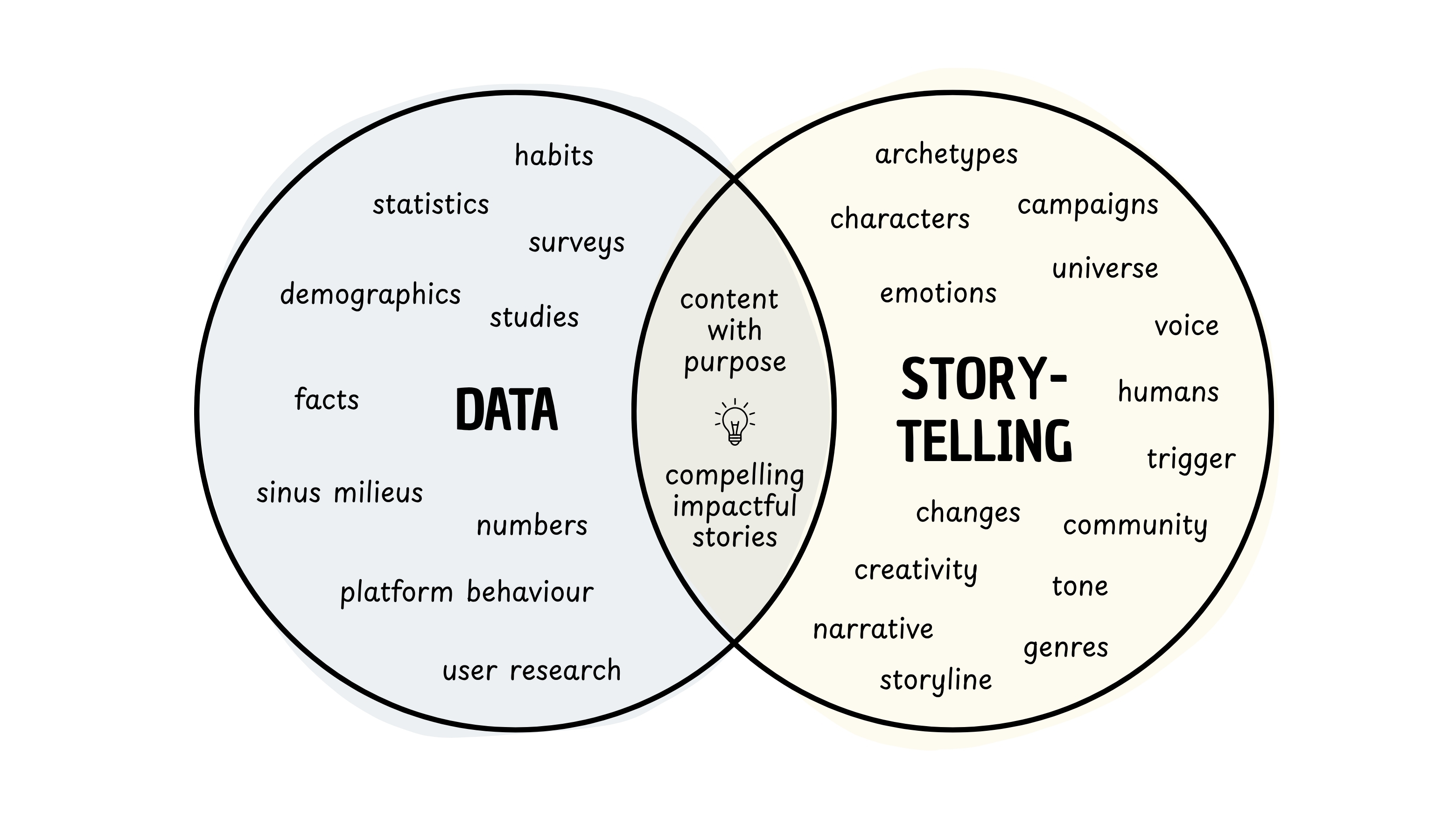
That's where data actually lives. Not in dashboards or reports, but in the everyday. We've been taught to keep them separate, the numbers on one side, the narrative on the other. But data and storytelling aren't opposites. Bring them together, and something clicks.
We want to make this journey easy to digest, with clear ideas and some visual help along the way. Because at the intersection of logical, creative, methodical human approach, there's a smarter way to tell stories that actually mean something to the people they're made for.
Data & Storytelling: A Contradiction?
Data is often seen as cold and logical, consisting of rows of statistics, percentages and metrics. Storytelling, on the other hand, is emotional, human and immersive. It makes people laugh, dream and form connections.

What if data doesn't kill creativity, but it actually sets it free?
Data as Creative Permission, Not a Cage
Navigating the waves of the tech revolution, we live at an unimaginable pace.
Why do you think data matters for storytelling?
Immersion in important, relevant topic research that nurtures analysis and brings projects out of the box is the real combination where data gives creative teams the vocabulary to sell bold ideas to decision-makers. Without it, a pitch is just a feeling. With it, it becomes an argument.
Use data for decision-makers: Data is a powerful tool when presenting ideas to stakeholders, especially those focused on budgets, ROI, and measurable outcomes. By grounding proposals in research, statistics, and user insights, content strategists can justify unconventional or „crazy“ creative ideas and build trust with decision-makers.
Personas, Triggers and Human Behaviour as Creative Tools
Here, we are going to dive deeper into essential anchor points that have been evolving in the marketing world: Personas and audience segments offer a useful framework for understanding motivations and emotional triggers.
1. Identify the Target Group in Depth
Let's start with Psychographic segmentation. The two essential approaches to grasping these audience-based psychological characteristics are Demographic segmentation and behavioural segmentation.
- Demographic: Data research on specific attributes of highly specific customers, like age, location, income, and occupation, to begin with.
- Behavioural: Focuses on brand interaction, including purchase history, website visits, and product usage.
What tends to be more effective when applying these data to a real campaign or project, and how to build one, goes into capturing data, followed by a clear brand voice for communication of an innovative story. The laser focus direction is the message in the design of every piece, and, finally, a careful analysis of the collected data to identify unmet needs for creating new products.
Data can support this process in three ways:
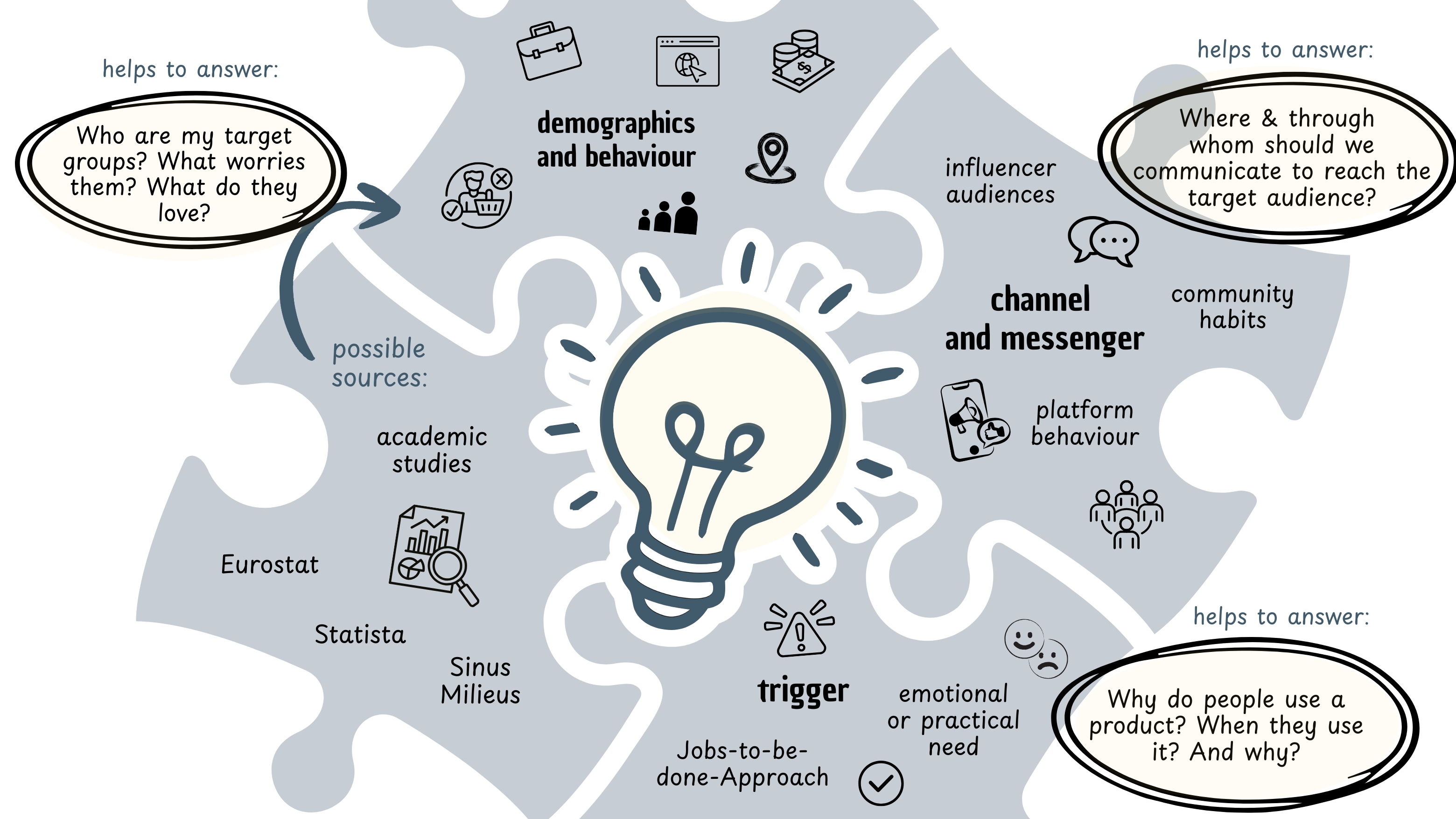
Not just through demographics, but through psychological drivers. One possible tool is the Sinus Milieus - a social model developed by SINUS over 40 years ago. In short, this model groups people together based on their shared values and social circumstances. However, there are also other sources, such as Statista, Eurostat and academic studies, that can help answer essential questions:
- Who are they?
- What worries them?
- What do they love?
2. Find the Trigger
Data can provide insights to unlock a creative idea. One example is a beverage campaign based on the insight that men enjoy a cold drink after working out. This could lead to a campaign featuring real athletes after their workouts: simple, but data-driven.
This also reflects the Jobs-to-be-Done approach: “Customers don’t buy products. They hire them to do a job.” Therefore, data can reveal why people use a product, when they use it and what emotional or practical need it fulfils. These insights can then help to create relevant storytelling campaigns.
3. Verify the Channel and Messenger
Data shows you not just what to say, but where and through whom. Insights into platform behaviour, influencer audiences, and community habits help ensure that content is placed effectively.
Replace gut feeling with data to validate ideas before production.
AI tools can support this process, especially for research and data gathering, and could be very useful. However, AI should be used consciously, and its outputs should be double-checked to ensure insights remain accurate and trustworthy.
After taking a slow breath into the creation of your next campaign or content strategy for your client, don't forget to take a read and grasp some of these elements, as they will help you connect the dots and understand marketing and human behaviour.
Using Data to Stand Out From AI Content
Data-driven storytelling allows content strategists to differentiate their work. It ensures that every piece of content has a defined goal and resonates with the intended audience.
By combining emotional narratives with verified data, content becomes purposeful, credible, and difficult to replicate. This creates a competitive advantage in today’s overwhelming mass of content. While AI can generate content at scale, it often flattens everything into the average. What it lacks are specific, human insights - especially those gathered through surveys, interviews or direct interaction with communities.
This is where the data becomes essential. Anyone can prompt a story, but not everyone can uncover that one unusual, specific insight that makes a story feel real, authentic and relatable.
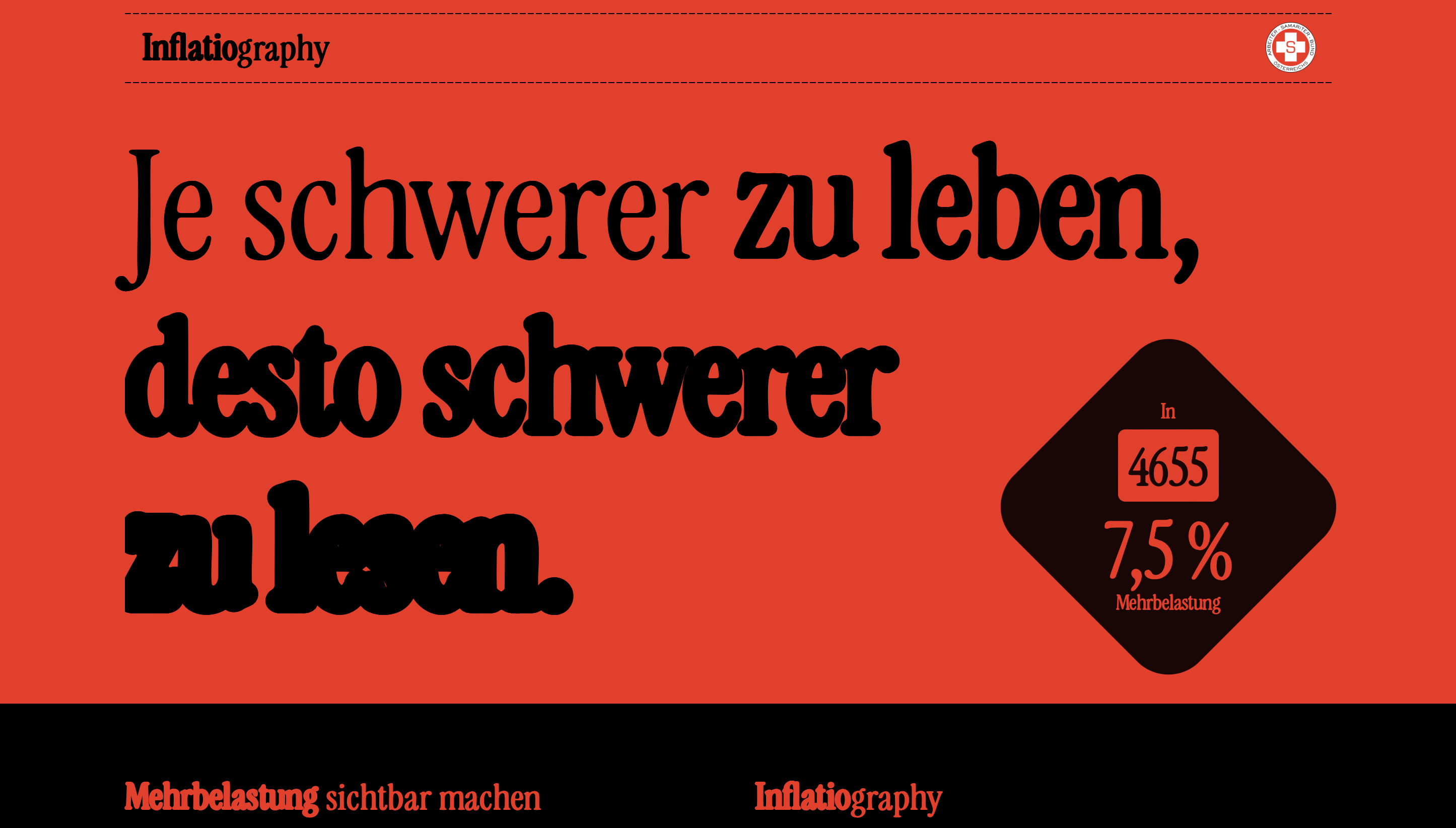
An example from Chris Hofbauer is https://www.inflatiography.at/ (© Demner, Merlicek und Bergmann/DMB.) A combination of real data, statistics, surveys, and coming up with a simple, well-designed concept showing the inflation in every specific region in Austria.
Data does not have to be expensive or perfectly scientific. Even small-scale observations, like talking to family members to validate assumptions about older audiences, can provide valuable direction. The goal is not to write a thesis, but to find a reliable compass.
Conclusion & an Invitation to Try It Yourself
So here's where we leave you, not with a checklist, but with a question.
Before your next story, campaign, or content idea takes shape, try this: spend 30 minutes with one real piece of data about the people you're trying to reach. Not a dashboard full of numbers. Just one thing. What does it tell you that you didn't already assume?
That's usually where the interesting stuff begins. Data won't write your story for you. But it will point you toward the one worth telling, the one that actually means something to the people it's made for. And in a world drowning in content, that's not a small thing.
That's the whole game.
Where to go from here #
How to Become a Storytelling Mastermind
References #
Ulwick, Anthony W. (2016): Jobs to be done: theory to practice. USA: Idea Bite Press.
Psychographic segmentation: Understanding your audience. Adobe for Business Team.
Harvard Business Review: Rediscovering Market Segmentation (2016), by Daniel Yankelovich and David Meer.
https://www.sinus-institut.de/sinus-milieus
This article is based on a conversation with Chris Hofbauer, who is teaching the course Cross-Platform Storytelling in the second semester of the Master’s programme in Content Strategy.