


 Content strategy isn’t a corporate luxury. It is a manageable tool for every organization seeking real impact. NGOs need a strategy to support their missions just as much as other businesses do. Although they don't chase profit, it is essential for non-profit organizations to define clear objectives and S.M.A.R.T. KPIs and focus on impact metrics rather than vanity ones.



This article is relevant for everyone interested in non-profit work and content strategy.
In commercial organizations, content strategists are typically aligned with clearly defined business goals, making objectives relatively easy to formulate. However, for most non-profit organizations, whose goals are not guided by profit, defining objectives requires a different approach. Whether the goal is to appear more credible to prospective donors and sponsors, or to find adopters for an animal shelter, NGOs need to build a strong content strategy in order to ensure consistent, purposeful communication that supports their mission and vision.
NGOs as mission-driven business #
There is a well-established perception that the non-profit sector cannot use terms such as ‘business objectives’ or even the word ‘strategy’. It can feel counterintuitive, even possibly cold, to apply a corporate logic to humanitarian work. However, treating an NGO as a mission-driven business doesn’t mean prioritizing profit over people; it simply means using strategy to become more efficient. This can save time for volunteers and helps in becoming purposeful in their actions to attract suitable partnerships and funding.
In a corporate setting, a lack of strategy often translates into lost revenue. But in an NGO context, where resources are frequently extremely limited (e.g. a small team of volunteers balancing full-time jobs), a lack of strategy can lead to burnout. Burnout, in turn, may result in volunteers leaving and, ultimately, NGOs having to close. For these organizations, content strategy is essentially a way of managing their resources. Adopting a more ‘business-like’ approach to their communication channels can ensure that every hour spent writing a newsletter, editing a video, or updating animal profiles in a shelter, is an hour spent moving closer to their organizational goals.
Thy WHY, the HOW, and the WHAT #
The Why in NGOs is clear, as non-profit tend to have a very strong mission-driven mindset. But what about the How?
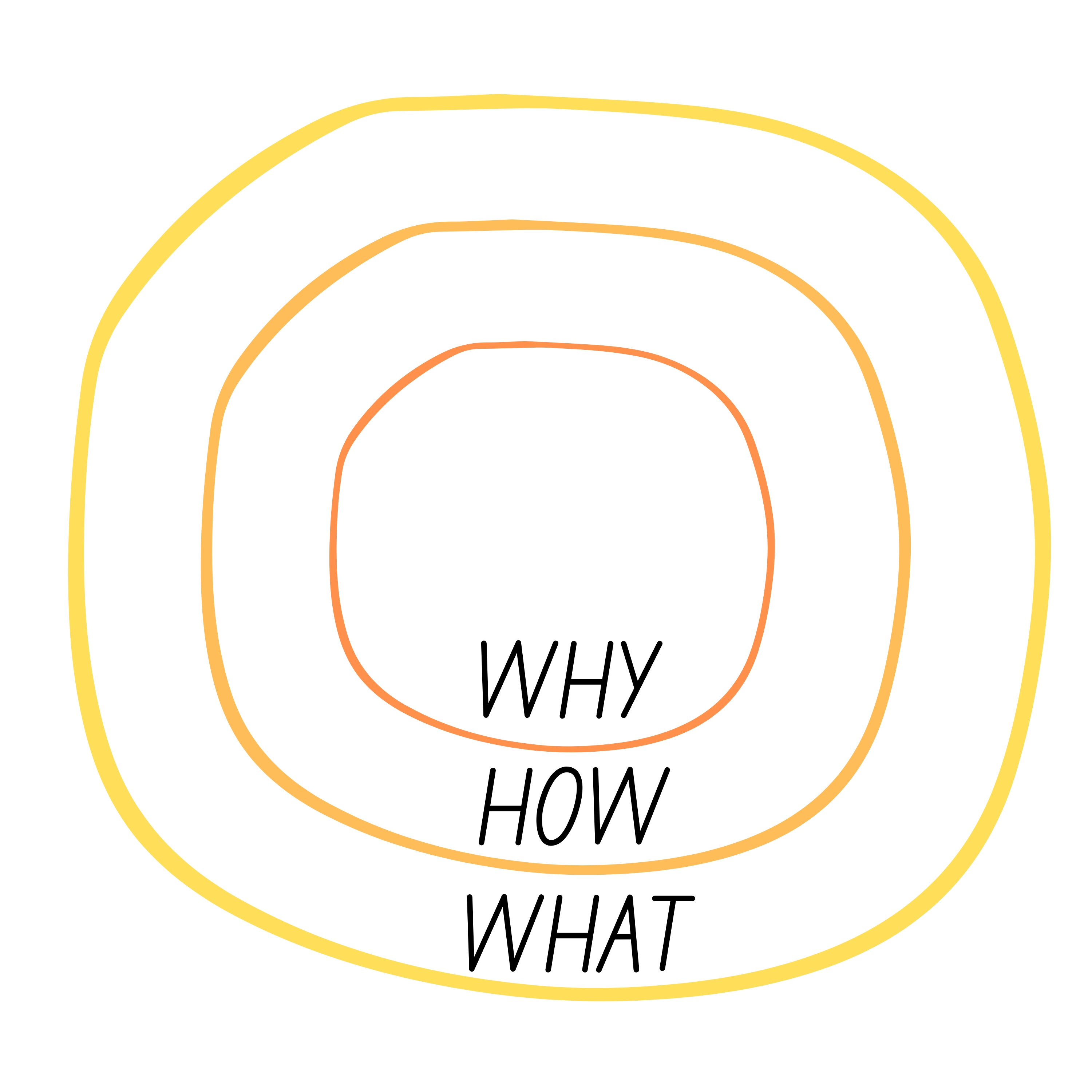
Most NGOs are excellent at articulating the Why. They understand their purpose deeply, whether it is saving the ocean, educating children in need, or finding a stray dog its forever home.
However, many organizations struggle with the How and the What. The How represents the strategic processes, the bridge that leads from intention to action, while the What is the content in itself. It is not enough to have a strong mission and sense of purpose. Organizations must also learn how to communicate their cause and build trust with the public, as well as with potential sponsors or fundraisers. A strong How (a well-defined strategy) ensures that the content being created, such as Instagram posts, newsletters, and a website, has a clear reason to exist and consistently moves the organization to the right direction.
Measuring success as a NGO #
One of the biggest challenges for NGOs is defining and using meaningful metrics and measurements. There is a common misconception that KPIs (Key Performance Indicators) are only relevant for tracking revenue, which can make them seem irrelevant in a non-profit context. In reality, KPIs are not about measuring activity for its own sake but about uncovering the story behind the data. For NGOs, this kind of data storytelling is a powerful tool for transparency. It allows the organization to prove to stakeholders that their contributions are making a tangible, real-world impact.
However, doing so requires a shift away from so-called Vanity Metrics:
- Vanity Metrics create a sense of success without informing action (e.g., 500 likes on a cute dog picture).
- Impact Metrics support decision making (e.g., 20 people clicked the ‘Adopt’ button).
As a performance measurement expert Stacey Barr points out, measurement is often feared because it is perceived as a judgement of performance. In reality, measurement is about learning in order to make informed decisions. The goal is not to assess whether a team is ‘good enough’, but to understand whether messages are reaching the cause the organization aims to support.
Moving forward #
To create an effective content strategy, NGOs must first establish clearly defined organizational goals. Successful NGOs are those that develop relevant and S.M.A.R.T. KPIs that are closely aligned to their mission. S.M.A.R.T goals are Specific, Measurable, Achievable, Relevant and Time-bound, helping organizations turn broad intentions into clear, actionable objectives that can be evaluated over time.
If we stop viewing strategy as a corporate luxury and start viewing it as a tool for impact, we can build organizations that are not only well-intentioned but also sustainable and effective.
Where to go from here #
Unlocking the Power of Purpose by Roman Sommersacher
References #
Barr, S. (2022). Why Does Every Public, For-Profit and Non-Profit Organisation Need KPIs? Staceybarr. https://www.staceybarr.com/measure-up/why-does-every-public-for-profit-and-non-profit-organisation-need-kpis/
Heaward Solutions (2025). What are KPIs and why do they matter to non-profit organisations? LinkedIn. https://www.linkedin.com/posts/heawardsolutions_what-are-kpis-and-why-do-they-matter-to-not-activity-7333809673755631620-uq5D/
Lanier, S. (2025). Master SMART goals for content marketing success. Siteimprove. https://www.siteimprove.com/blog/smart-goals-for-content-marketing/
Sinek, S. (2011). Start with Why: How Great Leaders Inspire Everyone to Take Action. Penguin Group.
30. January 2026